

Key Takeaways
- Games work when they’re fun first, with connection and thinking skills following naturally.
- Puzzles, card games, board games, tablet apps, and movement games all offer different kinds of engagement.
- The right game usually starts with lifelong interests, not difficulty levels.
- Short sessions, no scorekeeping, and following someone’s lead keep play enjoyable.
- Music, art, photo albums, and reading aloud spark the mind too.
- Juniper Village at South Hills in Green Tree offers spaces built for this kind of play.
What Makes Game Time So Powerful in Memory Support
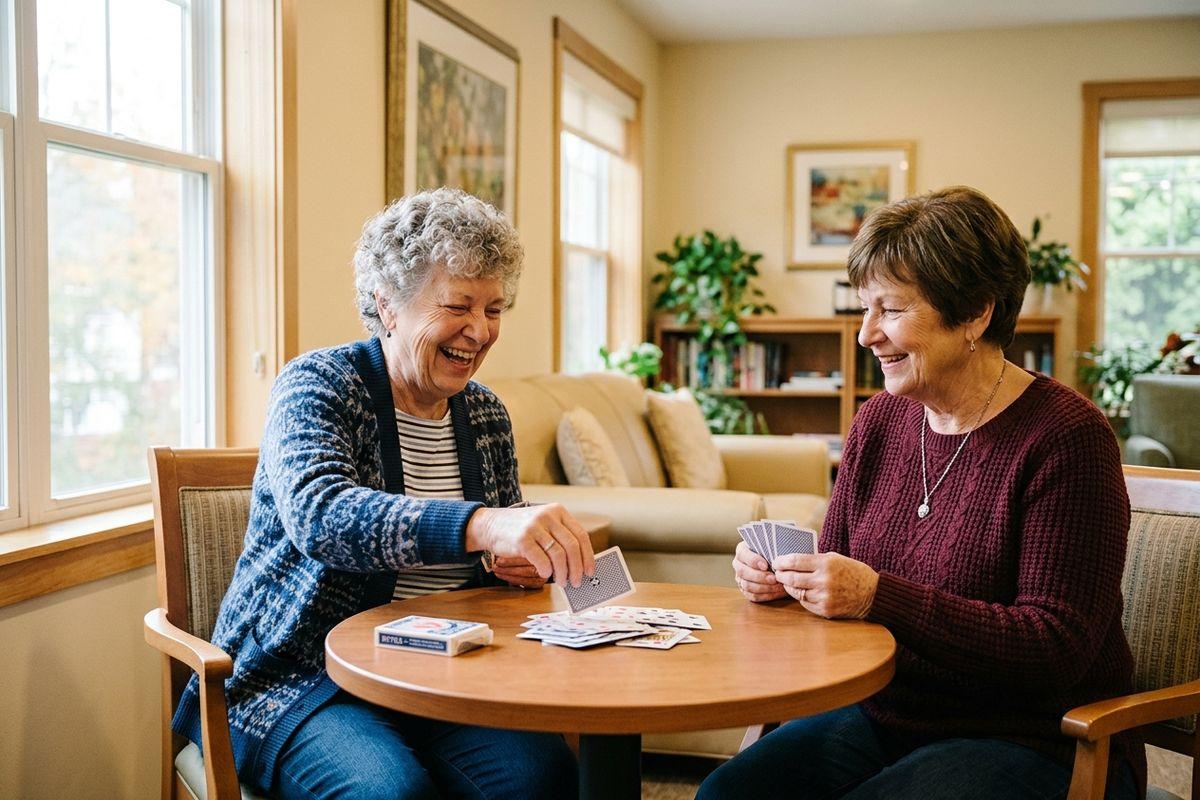
You’ve watched your mom light up over a hand of cards she’s played since childhood. Then you wonder if a different game might do more for her. Our team at Juniper Village at South Hills knows that simple question can give rise to a lot of confusing answers.
The most effective game is one someone genuinely enjoys playing. Engagement, laughter, and connection make the time worthwhile. The right games may be able to provide support for memory and reasoning through mental engagement. However, the overall evidence stays mixed.
Nonetheless, play and entertainment remain crucial in memory care. They’re not to be neglected in the bigger picture of general well-being.
Why Games Matter in Memory Care
Think about the last time you got pulled into a puzzle and forgot to check the clock. That feeling doesn’t fade with age. In memory care, a shared game can turn a quiet afternoon into something special. The day rings with rhythm and laughter when everyone has a reason to sit down together.
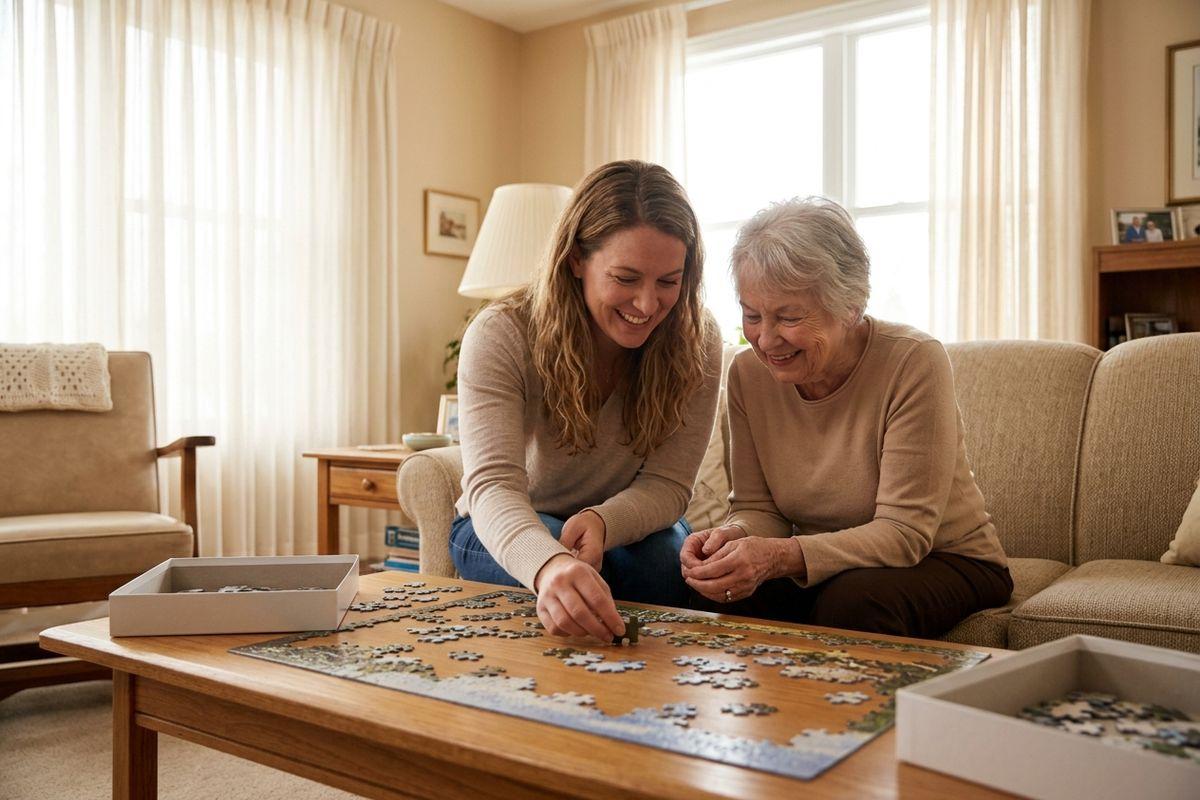
The connection that it comes with is just as valuable. Two people working on a puzzle don’t need small talk. The shared focus exercises thinking skills naturally.
Types of Games That Keep Minds Engaged
Puzzles and Word Play
Crosswords, word searches, and anagrams give the brain something low-pressure to work on. You can solve them together while trading guesses.
Jigsaw puzzles come in every difficulty level for a reason. A 500-piece landscape suits one person. A 24-piece image of a cardinal suits another. But both can deliver that same satisfying click when a piece finds its home.
Card, Dice, and Board Games
Familiar card games carry decades of muscle memory. Try these options for different kinds of play.
- Go Fish, Uno, and Solitaire for matching and focus
- Yahtzee and Shut the Box for working with numbers
- Chess and Monopoly for slower, strategic sessions
- Trivia games for group play
Trivia, in particular, tends to draw a crowd. Someone who cannot recall this morning’s breakfast may nail the name of a 1955 movie star. That moment feels great for everyone at the table.
Screen-Based and Movement Games
Tablet versions of solitaire, mahjong, and word searches remove the fuss of shuffling and setup. Bigger buttons and adjustable text make them easier on the eyes. There’s an extra layer of convenience in knowing the screen never loses a piece under the couch.
Active games like Nintendo Switch Sports pair movement with quick thinking. They’re also genuinely fun to watch. A gentle beanbag toss or balloon volley can do the same thing for those who are less familiar with technology.
How to Match a Game to the Person
Start by reviewing a person’s interest or profession. A retired accountant may love a dice game. A lifelong gardener may prefer a puzzle of a flower bed or a sorting game with seed packets.
From there, adjust freely. Larger cards, chunkier puzzle pieces, more time between turns. A simplified version of the rules can keep a favorite game in play. When a task starts to feel tricky, simpler sensory play can work beautifully.
Simple Ways to Keep Play Enjoyable
A few habits make the difference between a good session and a frustrating one.
- Skip the scorekeeping and skip the quizzing
- Follow their lead, even if the rules drift
- Celebrate small wins out loud
- Keep sessions short. 15 fulfilling minutes beat an hour of pushing through
If interest fades, that’s fine. Set the game aside and come back tomorrow. Mood fluctuations are common with cognitive conditions.
Other Activities That Engage the Mind
Games aren’t the only path. Music can also do remarkable things. A familiar song from someone’s twenties can bring back lyrics, dance steps, and stories in one go. Photo albums work the same way. They open the door to conversations about their lives.
Creative work has its own pull. Painting, drawing, and simple instruments give hands something to do. On top of that, they give the mind something to shape. Also consider reading aloud or listening to podcasts together. These activities keep curiosity alive.
How Memory Care at Juniper Village at South Hills Brings Games to Life
In our community, the game room stays busy. Cards are dealt, dice are rolled, and conversations spill over from one table to the next. The arts and crafts center sits nearby for painting days. And the media center makes room for tablet games, films, and shared listening.
That’s what Wellspring memory care can do. It shapes each day around what someone actually enjoys. Every community member gets a personalized well-being plan. That means the trivia lover and the puzzle person can both find their people. Outside, the courtyard and walking paths turn a beanbag toss or a stroll-and-chat into part of the routine.
Come See What a Good Afternoon Looks Like
Pick one game this week and try it at home, no goals attached. Then, when you tour our community, ask how days get planned and how play adapts as needs shift.
Juniper Village at South Hills welcomes you to stop by and sit in on a game. You can see how personal care and memory support feel in person. Schedule a visit today and bring your questions. There’s a lot more to games than meets the eye.